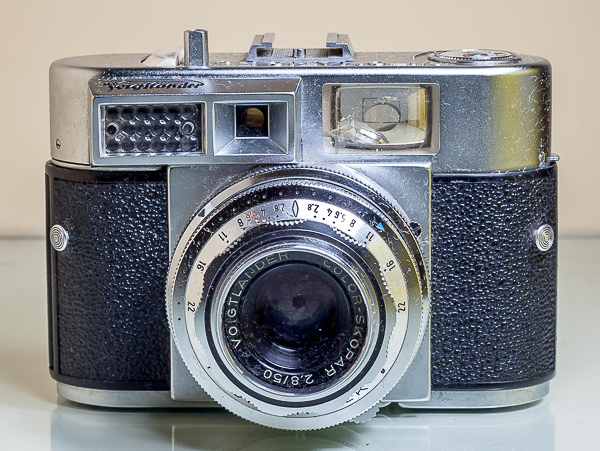
Brand: Voigtländer
Model: Vitomatic IIa
Produced: 1960
Type: Rangefinder
Format: 35mm
Lens: fixed, Voigtländer Color-Skopar 50mm f / 2.8
Exposure: Manual, built in light meter
Focus: Manual rangefinder
ISO: 12-800 manual setting
Flash: PC Socket
Ah, so the needle should go inside the circle!

The light meter window near the shutter release button
No, it’s not porn, i’m talking about a light meter, and it is the way in which, as a child, I learned how to do properly exposed images.
The lens of the Vitomatic IIa is excellent in sharpness and in color rendering, it is a Voigtländer and therefore is a guarantee. The lightmeter is pretty accurate, and you can see it inside the viewfinder and on a little window located at the top of the camera (so you can make adjustments without taking the camera to your eye). The meter indicator is composed by a needle, activated by the amount of light present in the scene, and by a circle that moves along with the aperture dial. To obtain the correct exposure the circle should overlap to the needle. Simple as eating candies, for a beginner 😉
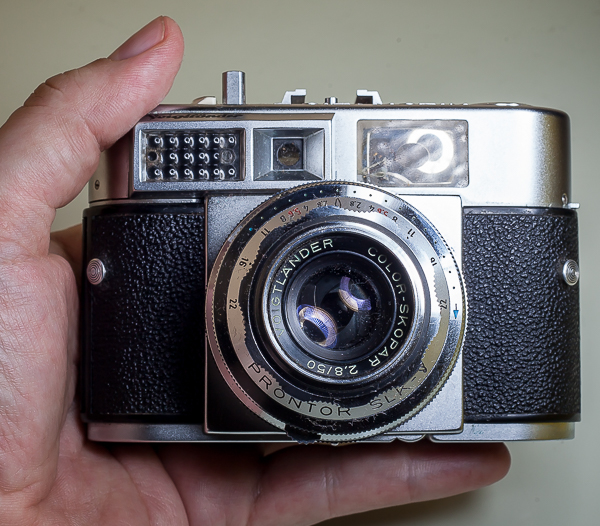 All adjustments are made through the rings on the lens: time, aperture, focus, iso and flash, for which there is a plug for the PC cord, in fact the machine only has an accessory shoe.

The focusing “automation” simbols
The focus is achieved through the rangefinder, ie in the center of the viewfinder there is a circular area where we see what we are framing doubled: turn the focus ring until the two images match up (for the subject you’d like to have in focus).
Continuing the discussion about the focus this camera has some sort of “automation”: on the lens there are two red symbols, a triangle and a circle, which indicates two focus distances which guarantee a large depth of field.
This can be really useful when shooting moving subjects or when you need to shoot rapidly such in street and candid photography.
Here below the diagram indicating the adjustments for this “zone focusing system”

I have a love-hate relationship with this camera. I love it because it is my father’s camera and the one that I used to learn how to shoot. I also love the opportunity to recalibrate the exposure without having to put the eye on the viewfinder. The lens gives beautiful and sharp images.
But it has a few things that I consider to be flaws and which are quite annoying for me: first of all it is very heavy, about 800g, it is really uncomfortable to carry around! Then, in situations where there’s strong lights and in backlight, the rangefinder becomes almost unusable, is really hard to see the second image superimposed.
The last thing, and this is something related to my personal tastes, is that I prefer more wide lenses, 50mm are just too much!






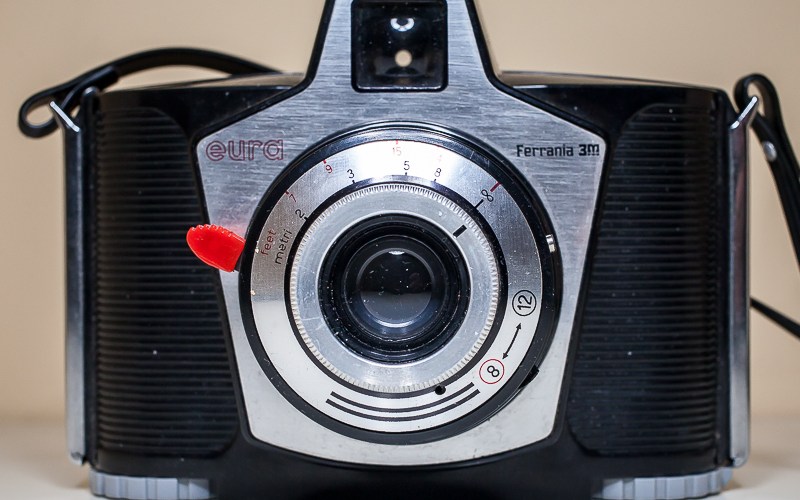
 Iniziando dalla messa a fuoco, occorre precisare che non e’ presente nè un telemetro, nè nessun altro modo di “vederla”, infatti nella ghiera troviamo indicate le misure 2, 3, 5, 8 metri e Infinito e ci dobbiamo basare su quelle e sulla nostra capacita’ di valutare la distanza dal soggetto.
 Semplicemente la Eura era una macchina progettata per scattare di giorno, al sole o all’ombra, con un rullino da 50 ISO. Quando dico “di giorno” escludo ampiamente alba e tramonto e mi posiziono in quel lasso orario che va dalle 10 del mattino alle 5 del pomeriggio in primavera o estate, e dalle 11 alle 15 in inverno (calcolo impreciso ma rende l’idea della quantita’ di luce necessaria).
 Occorre fare attenzione allo shutter, infatti scatta liberamente e non vi e’ nessun meccanismo che lo blocca in attesa dell’avanzamento della pellicole, quindi si richia di fare esposizioni multiple involontarie.
 Ne consegue che l’avanzamento pellicola e’ libero, si tratta solamente di una rotella dentata senza fermi o blocchi, quindi dobbiamo guardare attentamente nel piccolo oblo’ sul retro per capire quando siamo arrivati al punto giusto per scattare un’altra foto. (NB solitamente le pellicole 120 hanno le indicazioni col numero di fotogramma, bastera’ far combaciare il numero al centro dell’oblo’)


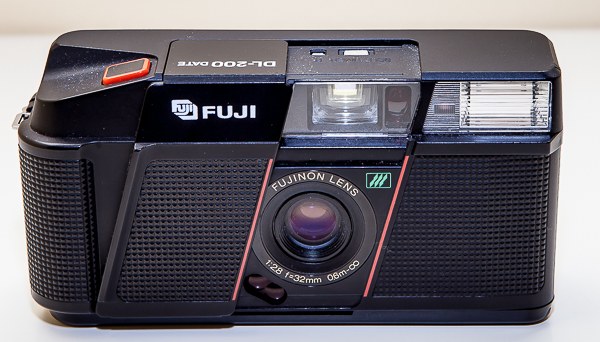


 L’autofocus come dicevo e’ abbastanza veloce, ogni tanto al buio tergiversa, ma nulla di cosi’ sgradevole, devo dire che e’ ottima come macchina da passeggio e la qualita’ delle immagini non mi dispiace. L’obiettivo Fujinon e nitido e rende colori molto vividi: io la ho usata prevalentemente con pellicole AGFA Vista 400 e direi che la saturazione e’ particolarmente corposa soprattutto in scene con fonti di luce molto forti.


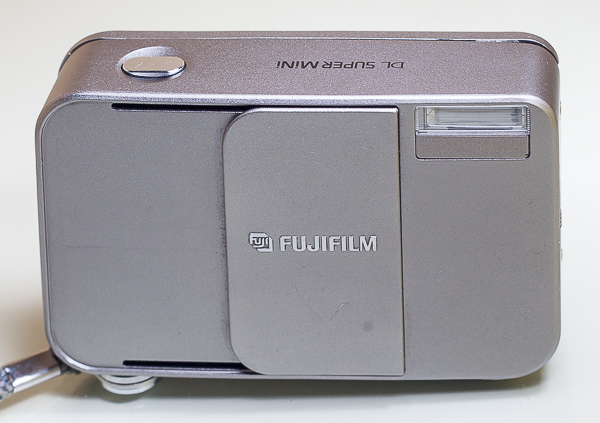

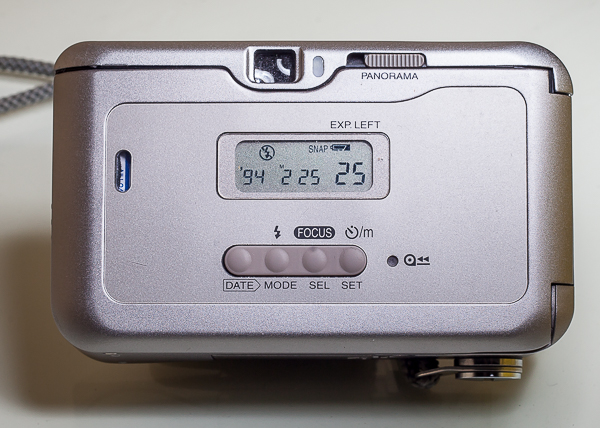
 Il caricamento della pellicola avviene tramite drop-in loading il cui funzionamento e’ piuttosto semplice: una volta inserito il rullino la macchina si occupa di svolgerlo tutto al suo interno per poi riavvolgerlo man mano che si scattano le foto, cosa che, in caso di apertura accidentale, permette di bruciare solo l’ultimo fotogramma.
 Anche se avete impostato la distanza di fuoco manualmente la lente si muove solo dopo aver cliccato, ed e’ frustrante, soprattutto se si pensa che alcune P&S, come la piu’ blasonata serie Ricoh GR, sfruttano proprio questa modalita’ di inserimento manuale per annullare il tempo che passa dal click allo scatto.


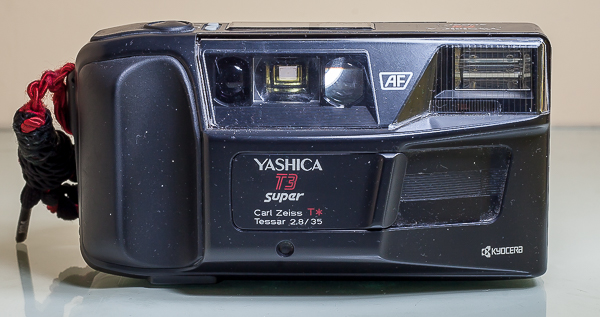
 Siamo sinceri, e’ bruttina, squadrata, grossa, ma ha uno Zeiss 2.8 nitidissimo!


 Marco Busato